

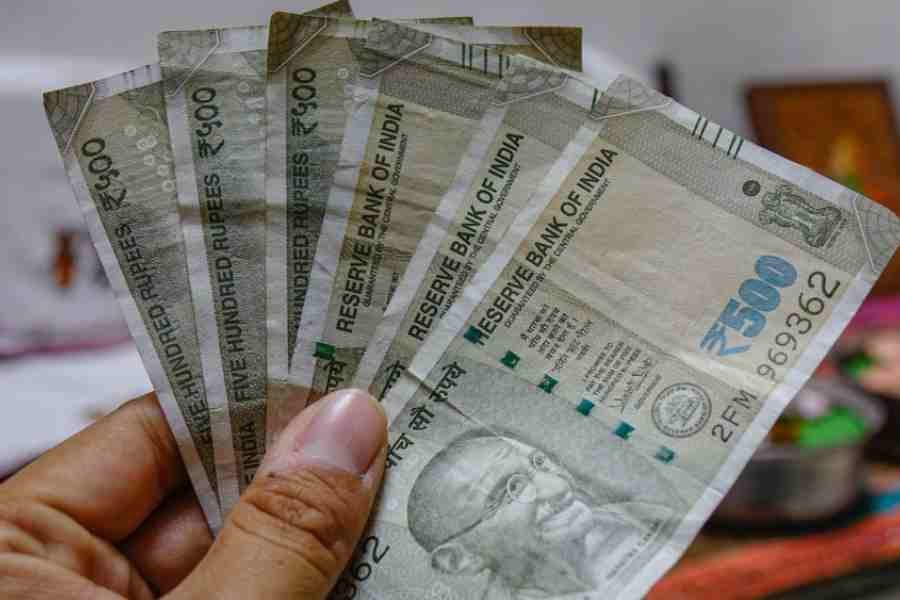
8th Pay Commission: Many employee organizations want the government to merge DA and DR with the basic salary. However, the government says no proposal is under consideration. Minister of State for Finance Pankaj Chaudhary provided this information in the Lok Sabha. What do experts say about this? Learn the full details…
Add informalnewz.com as a Preferred Source


8th Pay Commission: For the past few months, government employees have been hoping for some relief before the 8th Pay Commission. There was talk among employee organizations that the government might integrate the Dearness Allowance (DA) into the basic pay. Various speculations were rife, but the government has clarified the current situation. A clear statement from the government has put an end to all these discussions. Now, employees and pensioners are once again keenly watching to see how much relief the 8th Pay Commission will bring to their pockets.
The government has clarified that no proposal to integrate the Dearness Allowance (DA) into the basic pay is currently under consideration. This information was provided by Minister of State for Finance, Pankaj Chaudhary, in a written reply in the Lok Sabha on December 1, 2025. He stated, “At present, there is no proposal under consideration for the government to integrate the Dearness Allowance (DA) into the basic pay.”
This response was given in response to questions from MP Anand Bhadoria, who pointed out that inflation has risen so rapidly over the past 30 years that the DA and DR paid to employees and pensioners are no longer in line with actual retail inflation. This is why many employee organizations have long demanded that at least 50 percent of the DA be included in the basic salary.
The government also has to look at the economic balance!
Payroll expert Rohitashv Sinha, Partner, King Stubb & Kasiva, Advocates & Attorneys, says this issue isn’t just about sentiment, but also about the country’s economic balance. He says, “Employees argue that their real income has declined due to rising inflation. However, the government must consider both the country’s economic discipline and the demands of employees, especially during election time when expenditure and budgets need to be closely monitored.”
According to experts, direct relief is unlikely at this time, but the government may consider strengthening the fitment factor. The fitment factor is the coefficient based on which future DA and DR increases are determined. Currently, it is 2.57, and if it is increased to 3.0, the basic salary, along with all associated allowances such as HRA, TA, and other special allowances, also increase.
Rohitashv Sinha explains, “If the fitment factor increases from 2.57 to 3.0, the entry-level basic pay could increase by 15–20 percent.” Pensioners will also receive similar benefits, as pensions are always based on 50 percent of the newly revised basic pay.
When will the 7th Pay Commission term end?
The 7th Pay Commission’s term is set to expire on December 31st. Consequently, employees are increasingly wondering whether DA and DR will continue to increase as before until the 8th Pay Commission is implemented, or whether they will be temporarily suspended. Rohitashv Sinha also says that employees are now awaiting clear signals from the government.
Finally, the government has assured that DA and DR will be revised every six months to ensure that inflation does not erode the real value of salaries and pensions. This revision will be done on the basis of AICPI-IV i.e. All India Price Index of Industrial Workers, which is released by the Labour Bureau.

