

Census 2027: If you live in a rented house, you should know which residence you must use as the basis for filling out your census form.
Add informalnewz.com as a Preferred Source


Census 2027: The census process has officially begun. You can personally participate in this census exercise by submitting your details online. Specifically, as part of this process, you will be required to provide detailed information regarding your household—including the type of dwelling you inhabit and the various amenities available within it. Today, we explain exactly how you should fill out the form if you are a tenant, which specific questions you will need to answer, and what the dashboard interface—where you will submit your responses—looks like. So, let’s find out how quickly you can complete the entire form…
Aaj Tak correspondent Jitendra Bahadur Singh has reported on this process from the office of the Registrar General of India, having consulted with officials to understand exactly how the entire procedure is to be carried out.
What should you do if you are a tenant?
Please note: whether you are a tenant or a homeowner, for the 2027 Census, you must provide information specifically regarding your current residence. In the first phase of the census, individuals can complete the form directly from the home they currently inhabit. Any individual filling out their census details must provide information based on their current location and will also be required to add their Google location data.
What is Self-Enumeration?
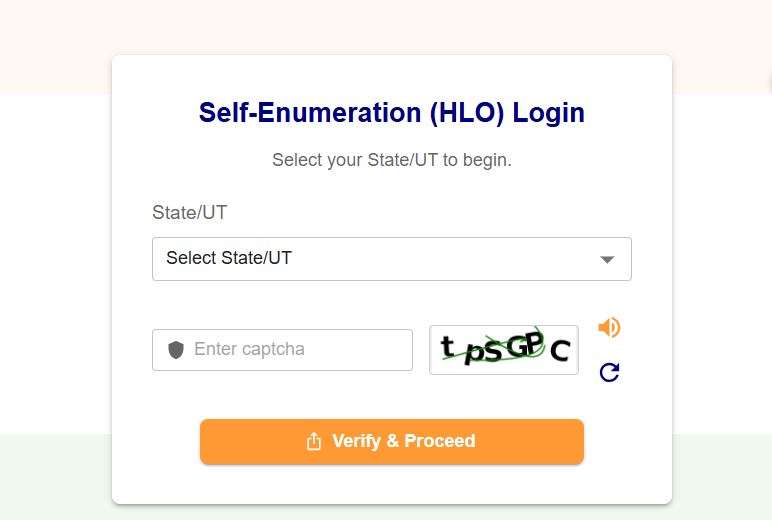
This means you can provide your family’s details yourself through an online medium. This process takes approximately 15–20 minutes to complete. Upon successful submission, you will receive an SE ID (Self-Enumeration ID). First, you must visit se.census.gov.in. Next, select your State/Union Territory, enter the CAPTCHA, and proceed. For the mapping section, using a laptop or desktop computer is recommended. Then, enter the name of the Head of the Household (this cannot be changed later). Next, enter your mobile number (one mobile number per family).
Providing an email address is optional. You will then need to select a language and complete the OTP verification process. Choose your preferred language (this cannot be changed later) and verify your identity using the OTP received on your mobile phone. In the fourth step, you must provide details regarding your place of residence. Fill in your District and PIN Code (optional), and enter your Village/City, Locality/Area, and a nearby Landmark. Then, click on “Search.” Next, mark your specific location on the map; position the red marker on the map directly over your home. Finally, click “Save & Continue.” This step helps in accurately identifying your residence.
Following this, Step 6 will begin, wherein you must answer a series of questions. You will then have the opportunity to review all the information you have provided. You can check the details in the preview version and make any necessary corrections. Finally, you must click to submit the form. Upon submission, you will receive an 11-digit SE ID. Subsequently, you will need to undergo a field verification process, during which you must present your SE ID. Once verified, your data will be officially accepted.
What points need to be kept in mind?
During this period, it is mandatory to submit the details within the specified deadline. Only one family can register using a single mobile number. The language and the name of the Head of the Household cannot be changed later. The SE ID is the most crucial document, which Census officials will use for verification purposes at a later stage.
What questions will be asked?
In the first phase of the Census—which commenced in India on April 1, 2026—a total of 33 questions will be asked. This will be a completely digital census, through which data will be collected regarding the status of the dwelling, basic amenities (water, electricity, toilets), family members, assets (vehicles, TV, internet), and—for the first time—couples living in live-in relationships.
1. Identification and House Details:
– Building Number and Census House Number
– Use of the House (Residential, Commercial, etc.)
– Condition of the House (Pucca, Kutcha, Habitable)
– Main materials used for walls, roof, and floor
2. Household and Housing:
– Household Number
– Total number of persons normally residing in the household
– Name and gender of the Head of the Household
– Whether the Head belongs to a Scheduled Caste/Tribe or other category
– Ownership status of the house (Owned or Rented)
– Number of rooms available to the household
– Number of married couples residing in the household
3. Facilities:
– Main source and availability of drinking water.
– Main source of electricity.
– Access to and type of toilet facilities.
– Sewage/wastewater disposal system.
– Bathing facilities.
– Kitchen and availability of LPG/PNG connections.
– Main fuel used for cooking (wood, gas, etc.).
4. Assets and Digital Access
– Availability of Radio/Transistor and Television
– Access to the Internet
– Laptop/Computer
– Telephone/Mobile/Smartphone
– Number of vehicles (ranging from bicycles to cars/jeeps)
– Main cereal consumed by the household
– Mobile number (for census communication purposes only)
What is different this time?
Live-in Couples: For the first time, couples living in a live-in relationship will be recorded as part of the family unit.
Self-Enumeration: You can also fill in your details yourself through the Self-Enumeration Portal.

