

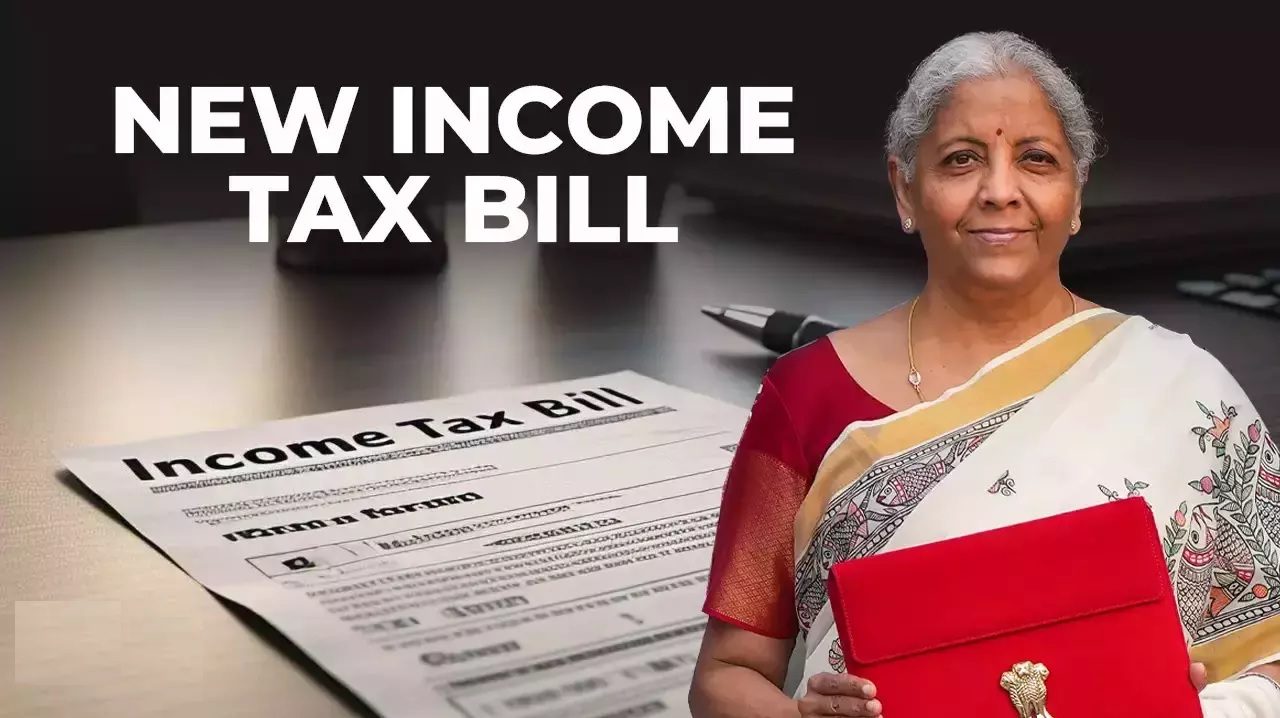
New Income Tax Bill: Finance Minister Nirmala Sitharaman may present the New Income Tax Bill in the Lok Sabha on Thursday. It has been made easy in many ways so that a common man does not have any problem in understanding it.
Add informalnewz.com as a Preferred Source


New Income Tax Bill: Finance Minister Nirmala Sitharaman may introduce the New Income Tax Bill 2025 in the Lok Sabha on Thursday, February 13, 2025. The purpose of this bill is to simplify the income tax laws so that even a common man can easily understand it.
New law contained in 622 pages
The new Income Tax Act consists of 536 sections, 23 chapters and 16 schedules, which have been contained in just 622 pages. The purpose of the new Income Tax Bill is not to introduce any new law, but to simplify the language of the existing Income Tax Act, 1961. This six-decade-old law has 298 sections and 14 schedules. When this Act was introduced, it had 880 pages. The new law is expected to come into force from April 1, 2026.
Short sentences used in the new bill
In the new Income Tax Bill, unnecessary sections related to fringe benefit tax have been removed. The new Income Tax Bill will have neither long sentences, nor explanations, nor provisions. This will make it easier to understand. Short sentences have been used in the new bill. It has been made easy with the use of tables and formulas.
In this, tables have been made for provisions related to TDS, estimated taxation, deduction on salary and bad debts. Along with this, the Taxpayers Charter has also been included in the bill, which explains what are the rights of the taxpayer and what are their responsibilities.
Only tax year mentioned in the new law
Let us tell you that in this new proposed law, the term ‘previous year’ used in the Income Tax Act, 1961 has been changed to ‘Tax Year’. Also, the concept of tax assessment year has also been abolished. Suppose you pay tax on the income of 2023-24 in the assessment year 2024-25. This concept has been abolished in the new law. Now only the tax year has been mentioned in it.
After being likely introduced in the Lok Sabha on Thursday, it will be sent to the Parliamentary Standing Committee on Finance for further discussion.

