

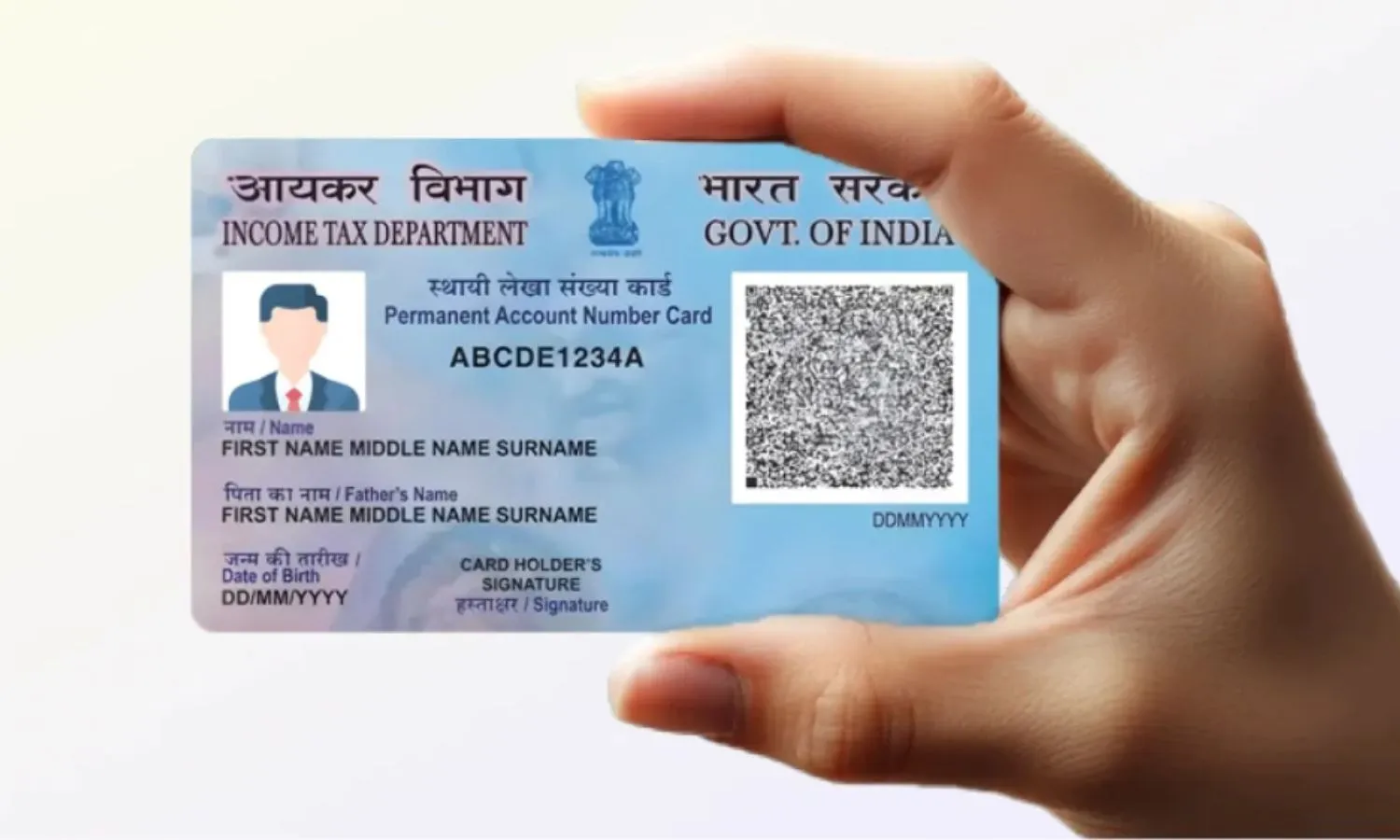
PAN Rule Update: The Income Tax Department has implemented changes to the PAN card rules effective April 1st. Four new forms have now been issued to replace the old ones. These new forms require the submission of more detailed information. The Income Tax Department has rendered the old forms invalid. Ultimately, what benefit will the common man derive from this change?
Add informalnewz.com as a Preferred Source


PAN Rule Update: April 1st is not merely a date; it marks a fresh beginning for financial accounting. This year, April 1st ushered in a host of changes—the most impactful of which involves revisions to the rules governing PAN cards. The regulations surrounding PAN cards have now undergone significant changes, and the relevance of Forms 93, 94, 95, and 96 has increased substantially for the general public. These forms have replaced the previous structural framework and will have implications not only for the common man but also for companies and foreign entities.
The government states that the objective behind this change in PAN regulations is to make the process more user-friendly, thereby simplifying compliance. With this amendment, the old PAN application forms have been discontinued. The previous system was notified under Rule 114 of the Income Tax Act, 1962. It comprised only two forms: Form 49A for Indian citizens and entities, and Form 49AA for foreign citizens and entities.
Who is the New PAN Form Intended For?
Form 93: Intended for individual citizens of India.
Form 94: Intended for Indian companies registered in India, or for foreign companies seeking registration here.
Form 95: Intended for individuals who are not Indian citizens.
Form 96: Intended for companies established outside India and registered abroad.
All these forms have been implemented under Section 262 of the Income Tax Act, 1958.
Changes in the New Application System
According to information provided by the Income Tax Department, the forms have now been made more concise and user-friendly. The process for making voluntary disclosures has been significantly simplified. Across all forms, providing a mobile number and email address—as well as tracking the application status—has been made easier. The forms now feature dedicated spaces for uploading a larger photograph and providing identification details. Companies, too, have been granted the flexibility to provide more detailed information while omitting unnecessary particulars. These changes have been designed in such a manner as to minimize the scope for errors.
Information Required in the Form
- You must enter your full name in the form, even if a different name appears on your Aadhaar card.
- It is now mandatory to enter your mother’s name in the form.
- You are required to specify your residential status—providing details regarding whether you are a local resident, a permanent resident, or a non-resident.
- You now have the option to have your PAN card delivered to your office address; however, you must provide valid proof for all the information submitted. If a different person is designated to receive the card, their contact number and identity details must be provided.
- For certain applicants, it has also been made mandatory to provide details regarding their passport and TIN.

