

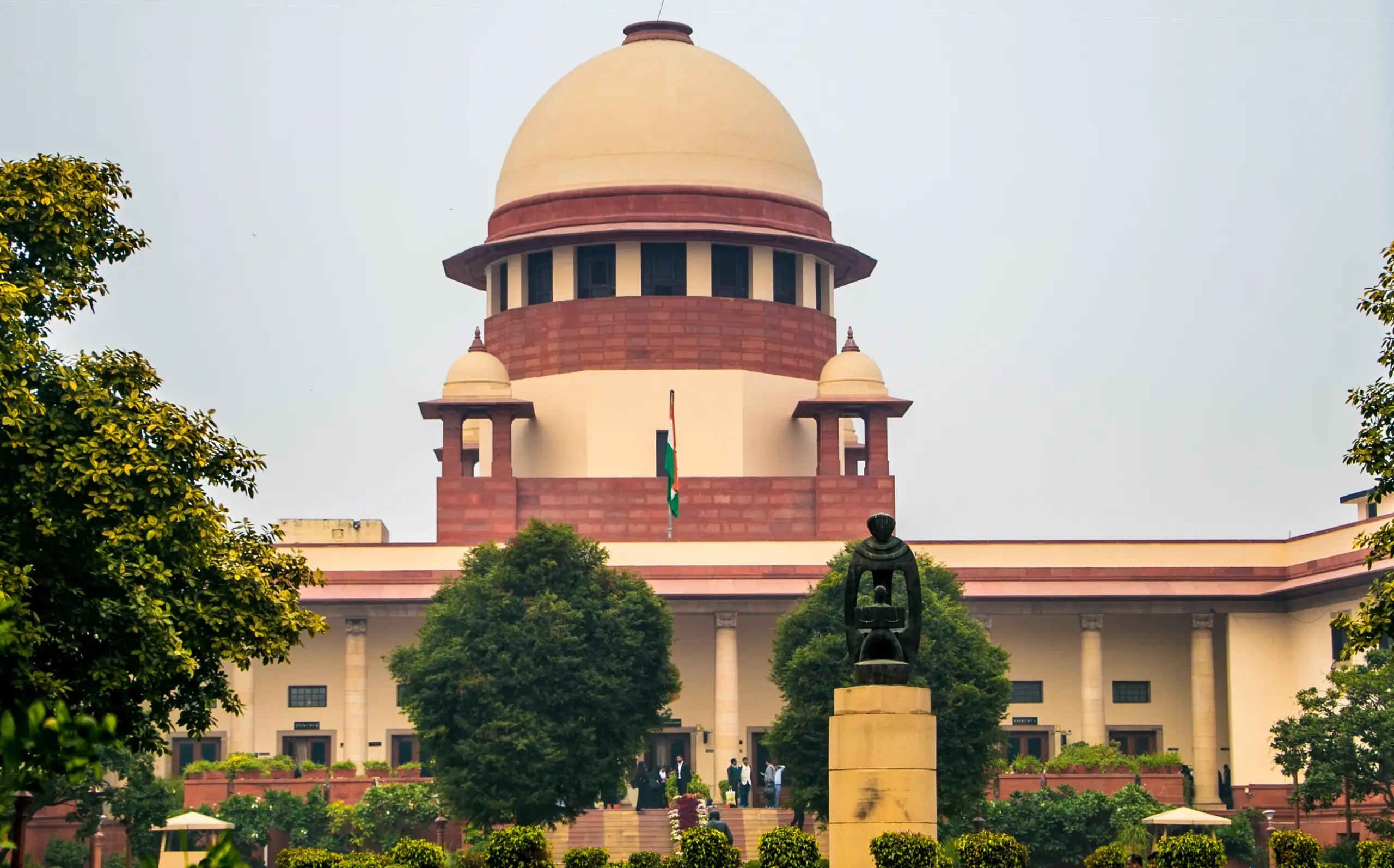
The Supreme Court held a crucial hearing on Muslim personal law and women’s property rights. Read the full story to learn more about the comments made by the CJI and the judges on Sharia law, legal void, and the UCC.
Add informalnewz.com as a Preferred Source


The Supreme Court on Tuesday said during a crucial hearing that a Uniform Civil Code (UCC) is essential to ensure equal rights for all women in the country. A bench comprising Chief Justice of India (CJI) Surya Kant, Justice R. Mahadevan, and Justice Joymala Bagchi made the significant observation while hearing a petition seeking equal inheritance rights for Muslim women.
The Court’s Concerns and Key Questions
A bench comprising Chief Justice of India (CJI) Surya Kant, Justice Joymalya Bagchi, and Justice R. Mahadevan posed several important questions to Prashant Bhushan, the lawyer representing the petitioners. Justice Bagchi cited the Bombay High Court’s landmark Narasu Appa Mali judgment, which held that personal laws cannot be tested on constitutional grounds. He asked whether the court could pronounce on the constitutionality of any personal law.
The bench raised the question: if the court strikes down the Sharia inheritance law, will it not create a legal vacuum? CJI Surya Kant expressed concern, “In our eagerness to reform, we might end up depriving them (Muslim women) and giving them even less than they already receive. If the Sharia Act of 1937 is repealed, will it not create an unnecessary vacuum?”
Arguments by Lawyer Prashant Bhushan
Prashant Bhushan presented his arguments in response to the court’s questions. Bhushan stated that if Sharia inheritance law is repealed, the provisions of the Indian Succession Act would apply in the resulting vacuum. The court could declare that Muslim women are entitled to equal inheritance rights as men.
Referring to the Shayara Bano judgment (2017)
Referring to the court’s right to intervene, he cited the Supreme Court’s decision that declared triple talaq unconstitutional. He argued, “After the Shayara Bano judgment, we cannot have a situation in the country where Muslim women are denied equal rights as men.”
Inheritance is a civil right, not a religious one.
Bhushan argued that inheritance is a civil right and cannot be protected under Article 25 of the Constitution by calling it a “compulsory religious practice.” The Muslim Personal Law (Shariat) Application Act is a statutory law, and the court can strike down its discriminatory provisions.
The Uniform Civil Code (UCC) and Legislative Powers
The issue of the Uniform Civil Code (UCC) also came up during the hearing. Justice Bagchi questioned whether the matter should not be left to the wisdom of the legislature, as it is their responsibility to enact a Uniform Civil Code under the Directive Principles of State Policy. The CJI agreed, saying the answer is a Uniform Civil Code.
Justice Bagchi remarked that the “one man for one wife” rule is not yet equally applicable to all communities. He asked, “But does this mean the court can declare all polygamous marriages unconstitutional? Therefore, we must respect the legislative power to give effect to the Directive Principles.”
Court’s Direction
The bench also opined that judicial intervention would be more appropriate if Muslim women themselves approached the court seeking exemption from the Sharia Act 1937. Bhushan clarified that some Muslim women were among the petitioners. Finally, the court suggested that Bhushan amend his petition. The bench stated that the petition should clearly state the legal remedies available if the inheritance provisions of Sharia are repealed. After Prashant Bhushan agreed to amend the petition, the court adjourned the hearing.

