

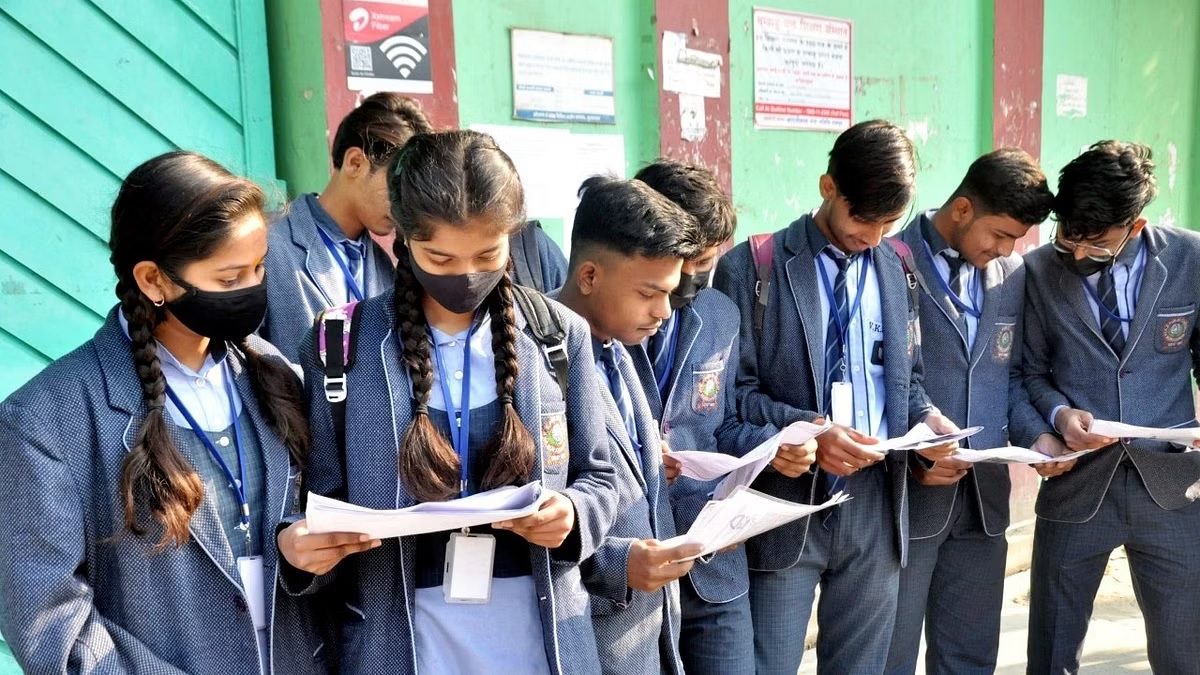
Biennial admissions to universities will help keep students motivated as they will not have to wait for a whole year to get admission if they miss out on admission in the current cycle. With biennial admissions, industries can also recruit on their campuses twice a year, increasing employment opportunities for graduates.
Add informalnewz.com as a Preferred Source


Now Indian universities and higher education institutions will now be allowed to give admission twice a year on the lines of foreign universities. The University Grants Commission (UGC) has approved this scheme. Now from the 2024-25 academic session, there will be two admission cycles July-August and January-February.
UGC chief Prof Jagdish Kumar said that if Indian universities can give admission twice a year, it will benefit many students, such as those students who missed university admission in July-August session due to delay in declaration of board results, health problems or personal reasons. They can take admission in the new session.
He said that biennial admission in the university will help students maintain motivation, as if they miss admission in the current cycle, they will not have to wait a whole year for admission. With biennial admission, industries can also recruit on their campus twice a year, which will increase employment opportunities for graduates.
The UGC chief said that biennial admission will help higher education institutions (HEIs) to plan their resource distribution, such as faculty, laboratories, classrooms and support services, more efficiently and will also accelerate the activities of the university.
Prof Jagdish Kumar said that universities across the world are already following the biennial admission system. If Indian higher education institutions adopt the biennial admission cycle, our higher education institutions can increase their international collaboration and student exchange. As a result, our global competitiveness will improve and we will be at par with global educational standards.
He said that if higher education institutions adopt biennial admissions, they will have to work on administrative complexities, good planning for better use of available resources and providing seamless support systems for smooth transition of students admitted at different times of the year. Higher education institutions can maximize the utility of biennial admissions only if they adequately prepare faculty members, staff and students for the transition.
However, Kumar clarified that it will not be mandatory for universities to offer biennial admissions and higher education institutions that have the required infrastructure and teaching faculty can use this opportunity.
He said that it will not be mandatory for higher education institutions to offer biennial admissions, this is the flexibility that UGC provides to higher education institutions that want to increase their student intake and introduce new programs in emerging areas. Higher education institutions will have to make suitable amendments in their institutional rules to be able to admit students twice a year.

