

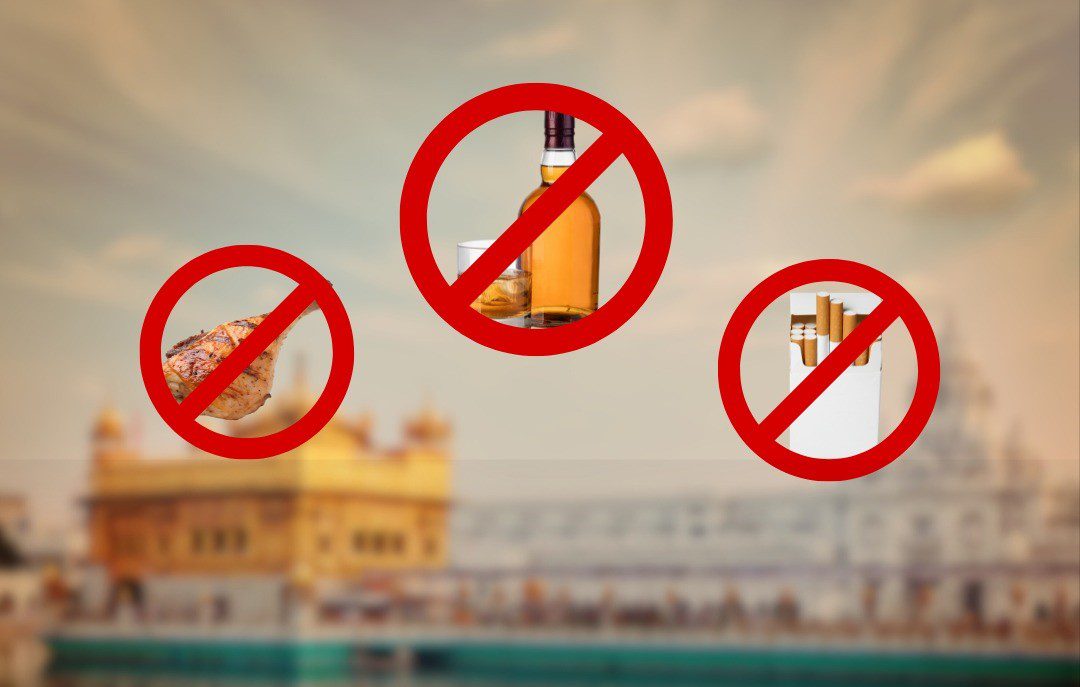
The Punjab government has recently granted holy city status to Amritsar, Anandpur Sahib and Talwandi Sabo through an official notification.
Add informalnewz.com as a Preferred Source


Meat, tobacco and alcohol banned: In a historic decision, Punjab Chief Minister Bhagwant Mann has officially designated three major Sikh religious centers in the state—Amritsar (Walled City area), Sri Anandpur Sahib, and Talwandi Sabo—as “holy cities.” This notification imposes a complete ban on the sale and consumption of meat, alcohol, tobacco, cigarettes, and other intoxicants within the boundaries of these cities. CM Mann described the decision as “historic,” saying it respects the religious sentiments of Sikhs and Punjabis.
Meat and Intoxicant Sale Banned in Three Cities
These three cities are home to three of the five Takhts of Sikhism: the Akal Takht (the highest Sikh seat, established by Guru Hargobind Singh in 1606), Takht Keshgarh Sahib in Anandpur Sahib (where Guru Gobind Singh founded the Khalsa Panth in 1699), and Takht Damdama Sahib in Talwandi Sabo (where Guru Gobind Singh compiled the final Guru Granth Sahib). The remaining two thrones are in Bihar and Maharashtra.
A long-standing demand of Sikh organizations and political parties.
This decision is based on a unanimous resolution passed in a special assembly session held in Sri Anandpur Sahib in November 2025, convened to commemorate the 350th martyrdom anniversary of Guru Tegh Bahadur. Sikh organizations and political parties have long demanded that these places be declared holy cities to maintain their sanctity. According to Professor Paramvir Singh of Punjab University, purity means purity in food, thoughts, and behavior.
Impact on the local economy
This ban will impact the local economy. Meat shops, liquor shops, bars, and tobacco shops will have to be closed. Some critics say that the livelihoods of small shopkeepers will be affected and their rehabilitation is necessary. Furthermore, Jhatka meat, a tradition of Nihang Sikhs, may face challenges. However, the government has promised to introduce e-rickshaws, minibuses, and shuttle services for pilgrims to increase religious tourism.
Inspired by CM Yogi’s policies
This move appears to be inspired by the policies of Uttar Pradesh CM Yogi Adityanath, where meat and alcohol are banned around many religious sites. Given the serious drug problem in Punjab, this could bring about a psychological shift. Sikh organizations have welcomed it, while some opposition parties are calling it an election stunt. Overall, this decision is important for preserving Sikh heritage and promoting religious tourism, but practical implementation challenges will remain.

